Harsiddhi Mata Temple, Ujjain: Shakti Peetha Near Mahakaleshwar
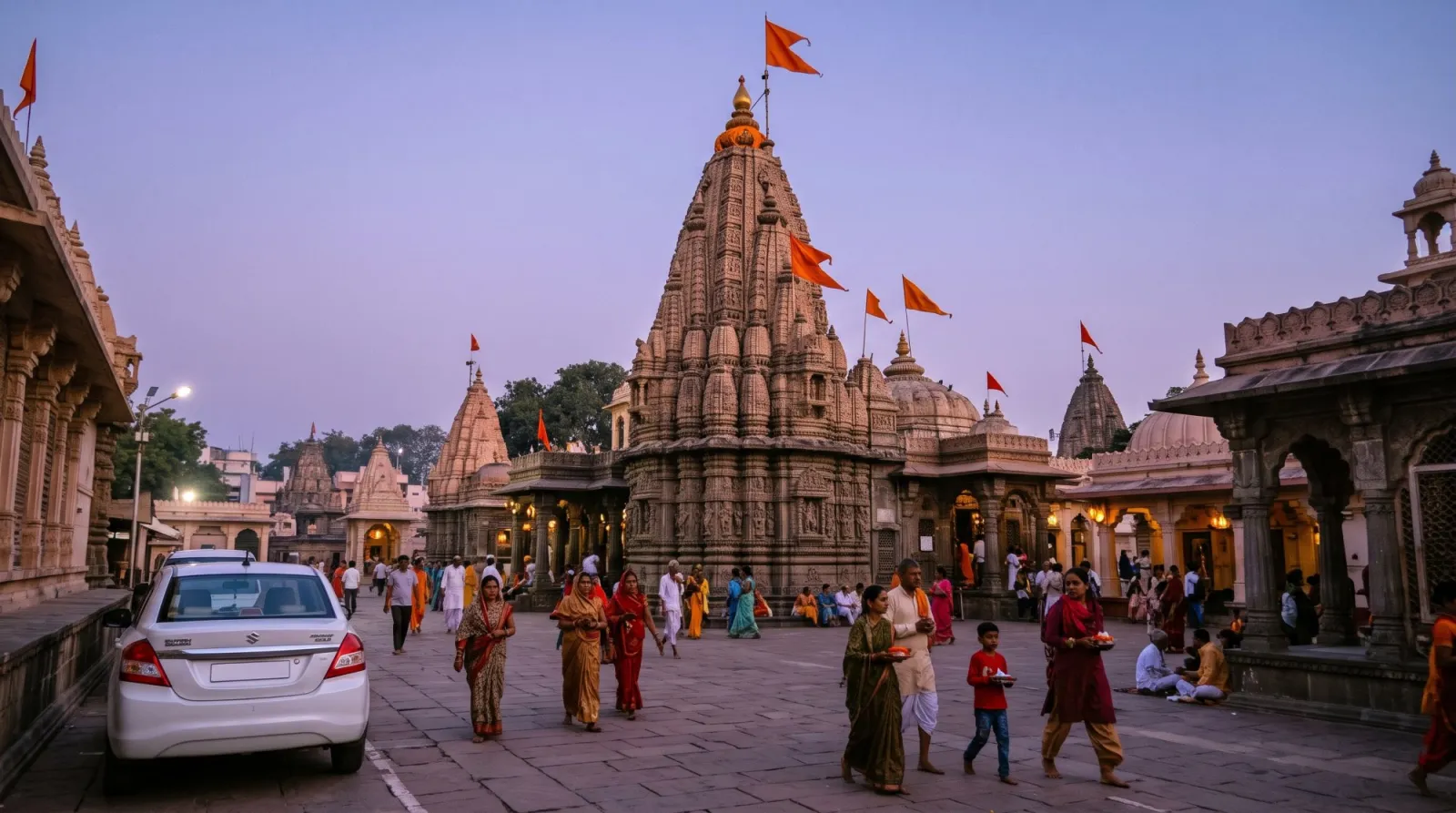
Harsiddhi Mata temple is one of the most important goddess temples in Ujjain and a regular stop for anyone visiting Mahakaleshwar. It is a short walk from Mahakaleshwar, so most pilgrims cover both on the same visit. The temple is best known as a Shakti Peetha and for its two tall lamp pillars, which are lit on many evenings and most grandly in Navratri. This guide explains the temple's significance, what to see and when to go.
A Shakti Peetha
Shakti Peethas are temples connected with the story of Sati, the consort of Shiva. According to the legend, after Sati gave up her life, Shiva carried her body in grief, and parts of it fell at different places across the subcontinent. Each of these places became a seat of the goddess. Harsiddhi in Ujjain is counted among the Shakti Peethas, and by tradition it is the place where Sati's elbow fell.
The presiding goddess is Harsiddhi Mata. Devotees come to pray for strength, success and the well-being of their families, and many treat a visit here as part of the same pilgrimage as Mahakaleshwar, honouring both Shiva and Shakti.
The Vikramaditya connection
Harsiddhi is closely linked with King Vikramaditya, the legendary ruler of Ujjain who appears in many Indian folk tales. By tradition, Harsiddhi Mata was the goddess he worshipped, and several local stories describe his devotion to her. These are traditional accounts rather than recorded history, but they are an important part of how people in Ujjain see the temple and the city's past.
The deepstambhs (lamp pillars)
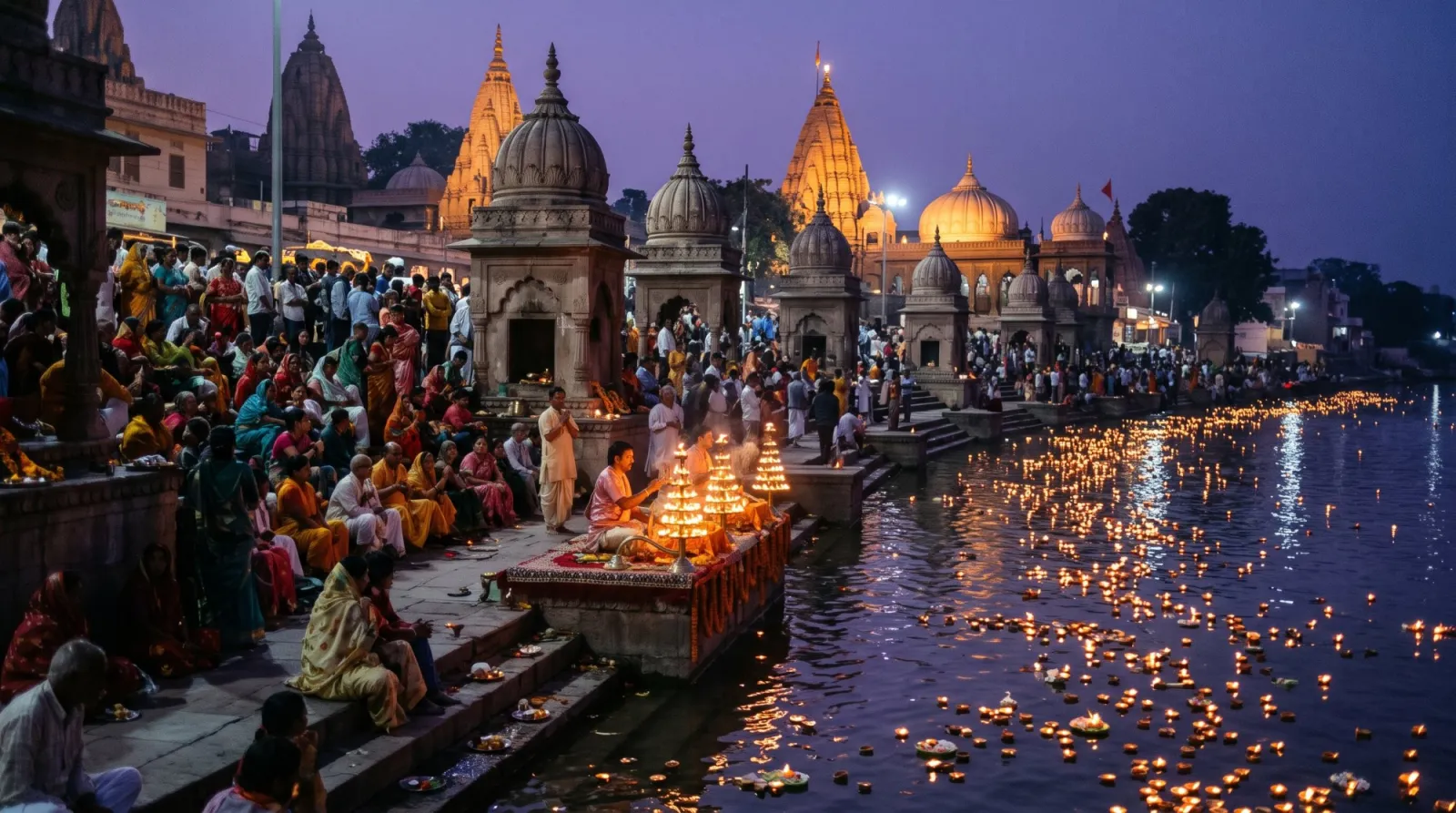
The most striking sight at Harsiddhi is the pair of tall deepstambhs, or lamp pillars, in the temple courtyard. Each pillar is lined with many small lamp holders from bottom to top. On many evenings, and especially during Navratri, the lamps are lit and the pillars glow against the night sky. Lighting them is a ritual in itself, and it draws devotees and visitors who come just to see it.
The lamps are lit at the evening aarti on many days, often arranged by devotees, and most grandly during Navratri; ask locally about the day's arrangements if you want to see them lit. Even when they are not lit, the pillars are worth a look in daylight.
Navratri at Harsiddhi
Both Navratris, in Chaitra (spring) and Ashwin (autumn), are the main festivals at the temple. The temple is decorated, there are special prayers through the nine days, and the deepstambhs are lit every evening of the festival. It is the most rewarding time to visit, but also the most crowded. Expect long queues, slow traffic in the old-city lanes around Mahakaleshwar and limited parking.
Shravan, Mahashivratri and the Simhastha Kumbh also bring large crowds to this area, because almost everyone visiting Mahakaleshwar walks over to Harsiddhi as well.
How it fits with Mahakaleshwar
Harsiddhi is very close to Mahakaleshwar, within walking distance of the main temple area. A practical plan is to finish your darshan at Mahakaleshwar, walk to Harsiddhi, and then return to your car for the temples that are further away, such as Kal Bhairav, which is about 5–6 km from Mahakaleshwar. This saves you from looking for parking twice in the busy streets of the old city.
If you have attended the Bhasma Aarti in the early morning, Harsiddhi is an easy next stop once the area opens up. Ram Ghat on the Shipra is also not far from here, and many visitors go there afterwards.
Practical tips
- Dress modestly. Shoes are left outside, and there are usually stands for footwear near the entrance.
- Stalls nearby sell flowers, chunari and other offerings for the goddess.
- Follow the instructions at the temple about phones and photography inside the shrine.
- The lanes between Mahakaleshwar and Harsiddhi are crowded on festival days, so keep children and elders close.
- Timings can change during Navratri and other festivals, so check locally if you plan to go early or late.
Getting there from Indore
Indore is about 55 km from Ujjain, so Mahakaleshwar and Harsiddhi together make an easy day trip. A car is most useful for the rest of the circuit, as many Ujjain temples are spread across the city. With TaxiGo, the driver waits while you are at darshan, bookings are taken 24 hours a day, driver details are shared before travel and confirmation usually comes within about 15 minutes.
Plan your visit
For transport, see our Mahakaleshwar temple taxi, the Ujjain full-day darshan taxi, taxi service in Ujjain and the Indore to Ujjain taxi, or send us an enquiry. Also read: Mahakaleshwar temple guide · Bhasma Aarti booking guide · Kal Bhairav temple guide.